Homemade Vanilla Layer Cake
If you’ve ever cut into a homemade cake and felt that sinking disappointment — dry crumb, dense layers, frosting sliding off — this recipe is here to fix all of that. This homemade vanilla layer cake is soft, pillowy, and stays moist for days. Yes, days. No dry cake situation here.
I’ve tested this more times than I can count, and the secret comes down to a few simple ingredients that most bakeries won’t tell you about. Sour cream. A splash of vegetable oil. And room temperature everything. Together, they create a crumb so tender it practically melts the moment it hits your tongue.
Whether you’re baking for a birthday, a celebration, or just because you want a really good slice of cake on a Tuesday — this one delivers every single time.
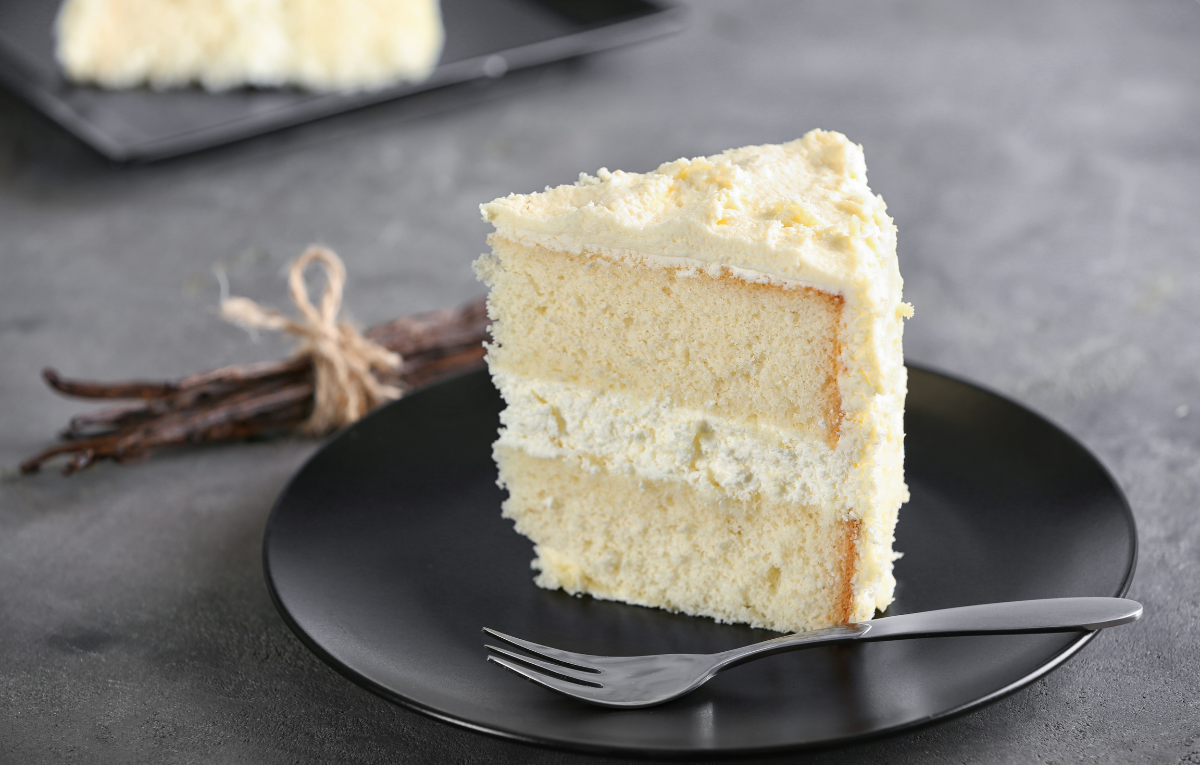
Why This Vanilla Layer Cake Stays So Moist
Most homemade cakes dry out because the recipe relies entirely on butter for fat. Butter is amazing for flavor, but oil is what actually holds moisture in a baked crumb. By using mostly butter with just a touch of vegetable oil, you get the best of both worlds — rich flavor and a soft, moist texture that doesn’t harden overnight.
The second game-changer is sour cream. It adds fat and a very mild tang that deepens the vanilla flavor without making the cake taste sour at all. It also makes the batter slightly thicker, which means the layers bake up tall and even rather than flat and sad.
The third factor is room temperature ingredients. Cold eggs and cold milk don’t emulsify properly into the butter, and that leads to uneven mixing and a tougher crumb. Give your eggs, milk, and butter at least 30 minutes on the counter before you start. It makes a real difference.
Common Mistakes to Avoid
Overmixing the batter is the number one reason homemade cakes turn out dense and rubbery. Once you add the flour, mix only until the dry streaks disappear. A few small lumps are completely fine.
Frosting a warm cake is the second biggest mistake. Even slightly warm layers will cause buttercream to melt, slide, and look messy. Let your layers cool fully — at least one hour at room temperature — before you even think about frosting.
Opening the oven door too early is another one to watch. Resist the urge to check on your cake before the 25-minute mark. Opening the door lets heat escape and can cause the center to sink.
Tips For The Fluffiest Buttercream
The buttercream on this cake is just as important as the layers themselves. To get it light and cloud-like, you need to beat the butter on its own first — at least two to three minutes — before adding the powdered sugar. This whips air into the butter and gives the frosting that bakery-style fluffiness.
Add the powdered sugar slowly, one cup at a time, and keep the mixer on low to avoid a sugar cloud in your kitchen. Once everything is combined, bump the speed up to high and let it go for another two minutes. The frosting will go from dense and heavy to light and smooth right before your eyes.
If your buttercream looks too stiff, add heavy cream one tablespoon at a time. If it looks too soft, add a little more powdered sugar.
Frequently Asked Questions
Can I make this cake ahead of time? Yes! Baked and cooled cake layers can be wrapped tightly in plastic wrap and frozen for up to one month. When you’re ready to use them, thaw overnight in the refrigerator and frost as usual.
Can I use cake flour instead of all-purpose flour? You can. Cake flour will give you an even more delicate, fine crumb. Use the same amount but expect the layers to be slightly more fragile.
What if I don’t have sour cream? Full-fat Greek yogurt works as a 1:1 substitute and delivers very similar results in terms of moisture and texture.
How do I get flat, even cake layers? Let your batter rest in the pans for five minutes before baking so it settles evenly. You can also use baking strips (wet strips wrapped around the outside of the pan) to help the layers rise flat.
Can I add flavors to this recipe? Absolutely. Swap the vanilla extract for almond extract, add lemon zest to the batter, or fold in a cup of mini chocolate chips for a fun variation.
Final Thoughts
This homemade vanilla layer cake is proof that a moist, soft, bakery-worthy cake is completely achievable at home — no fancy equipment, no hard-to-find ingredients, no pastry school required. The sour cream and oil do the heavy lifting, the buttercream comes together in minutes, and the result is a two-layer cake that looks beautiful and tastes even better.
Bake it once and it’ll become your go-to for every occasion.
Homemade Vanilla Layer Cake
Ingredients
- 2.5 cups all-purpose flour
- 1¾ cups granulated sugar
- 2.5 tsp baking powder
- 1/2 tsp salt
- 3/4 cup unsalted butter softened
- 1 cup whole milk room temperature
- 1/4 cup sour cream
- 2 tsp pure vanilla extract
- 2 tbsp vegetable oil
Buttercream Frosting
- 1 cup unsalted butter softened
- 4 cups powdered sugar sifted
- 3 tbsp heavy cream
- 1 tsp vanilla extract
- Pinch of salt
Instructions
- Prep oven & pans — Preheat oven to 350°F (175°C). Grease two 9-inch round cake pans, line bottoms with parchment paper, then grease the parchment.
- Mix dry ingredients — Whisk together flour, sugar, baking powder, and salt in a large bowl. Set aside.
- Cream butter — Beat softened butter on medium-high for 2 minutes until pale and fluffy.
- Add eggs & vanilla — Add eggs one at a time, beating well after each. Mix in vanilla extract and vegetable oil.
- Combine wet & dry — With mixer on low, add dry ingredients in three additions, alternating with milk and sour cream (start and end with dry). Mix just until combined.
- Bake — Divide batter evenly between pans. Bake 28–32 minutes or until a toothpick inserted in the center comes out clean.
- Cool completely — Cool in pans 10 minutes, then turn out onto a wire rack. Cool fully before frosting (at least 1 hour).
- Make buttercream — Beat butter on medium-high for 3 minutes. Add powdered sugar one cup at a time on low. Add heavy cream, vanilla, and salt. Beat on high 2 minutes until fluffy.
- Assemble & frost — Spread frosting on top of first layer. Place second layer on top. Apply a thin crumb coat all over, refrigerate 15 minutes, then apply final frosting layer.
Notes
- Room temperature ingredients are key for a tender crumb
- Don't overmix once flour is added
- Substitute Greek yogurt 1:1 for sour cream if needed
- Freeze unfrosted layers for up to 1 month
save pin for later