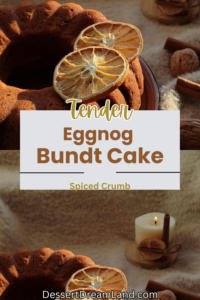
Eggnog Bundt Cake with a Tender, Spiced Crumb
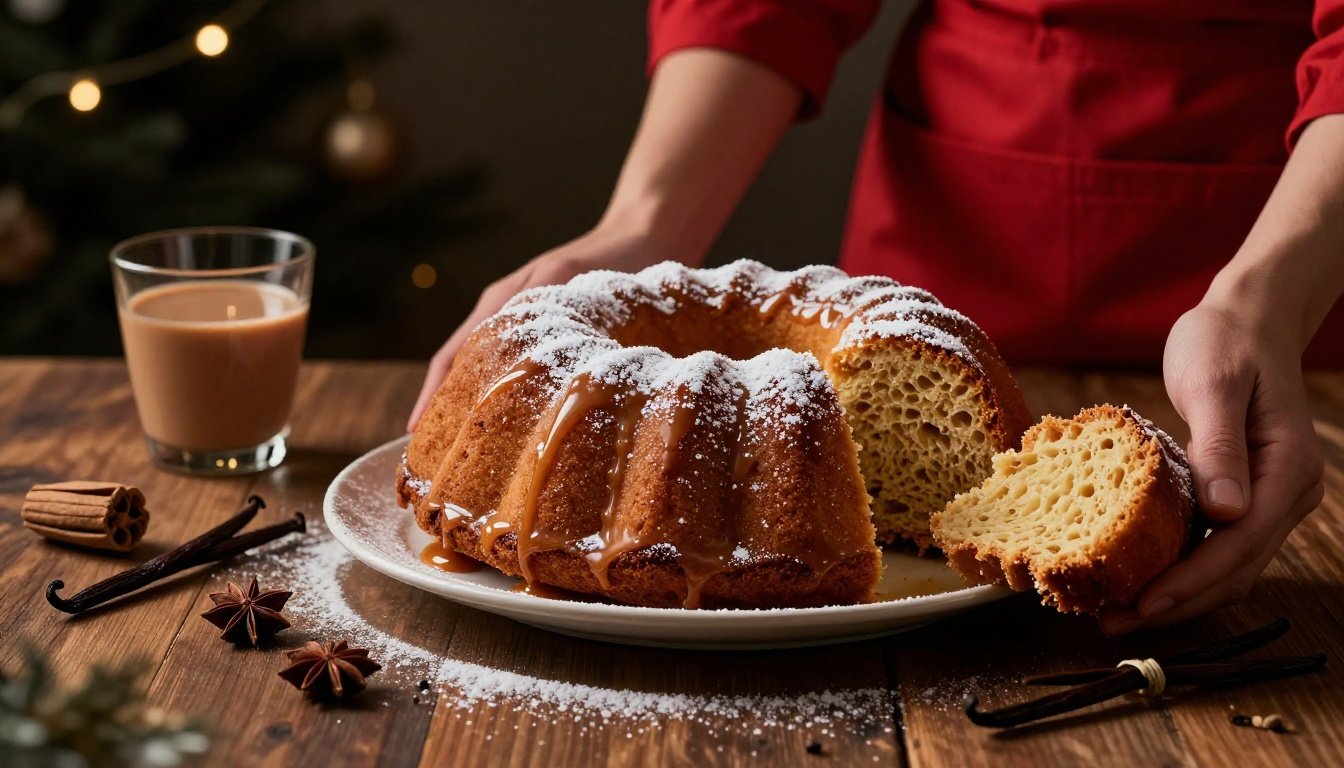
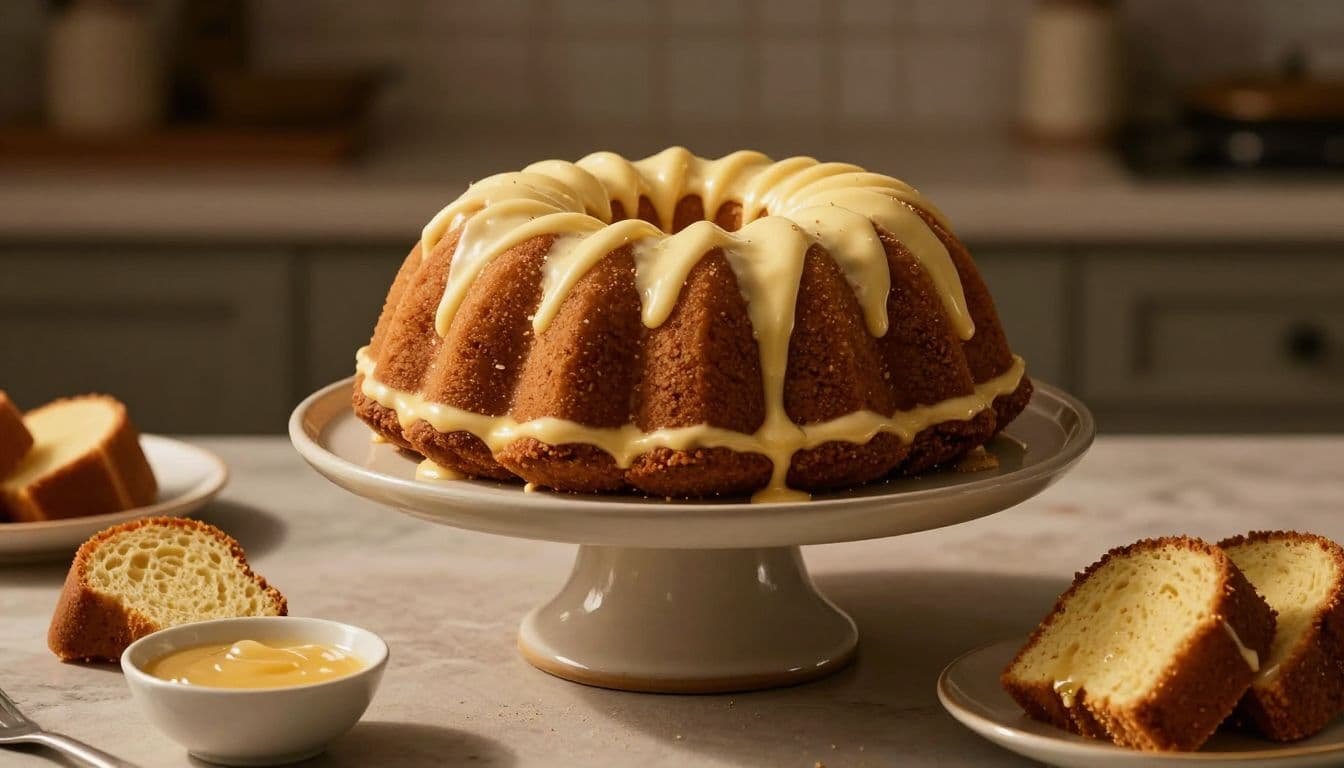
When the house smells of nutmeg, vanilla, and creamy eggnog, the holiday season feels close. This Eggnog Bundt Cake has a tender, buttery crumb and warm spice in every slice, then finishes with a simple glaze that makes it ready for sharing.
You don’t need complicated techniques or a long list of specialty ingredients to make a bakery-style dessert. You’ll find practical guidance for choosing the best ingredients, preparing your Bundt pan, judging the baking time (most recipes bake around 350°F for 35 to 65 minutes), and choosing between a classic eggnog glaze or a boozy rum or bourbon version. We’ll also cover common troubleshooting problems, cooling, storage, and the complete recipe card, so busy home bakers can serve a beautiful cake without the holiday stress.
First, gather your ingredients and prepare the pan properly for a cake that releases cleanly and stays moist.
Key Takeaways
- Use room-temperature ingredients, fresh eggnog, and freshly grated nutmeg for a soft, fragrant crumb.
- Grease and flour every curve of the Bundt pan, then let the cake cool before turning it out.
- Bake until a skewer comes out clean or with a few moist crumbs, avoiding an overly dry center.
- Finish with a simple eggnog glaze, or add rum or bourbon for a warmer holiday flavor.
- Refrigerate glazed leftovers within two hours and keep them at 40°F or below, following USDA egg safety guidance.
Eggnog Bundt Cake That Bakes Up Soft, Rich, and Festive
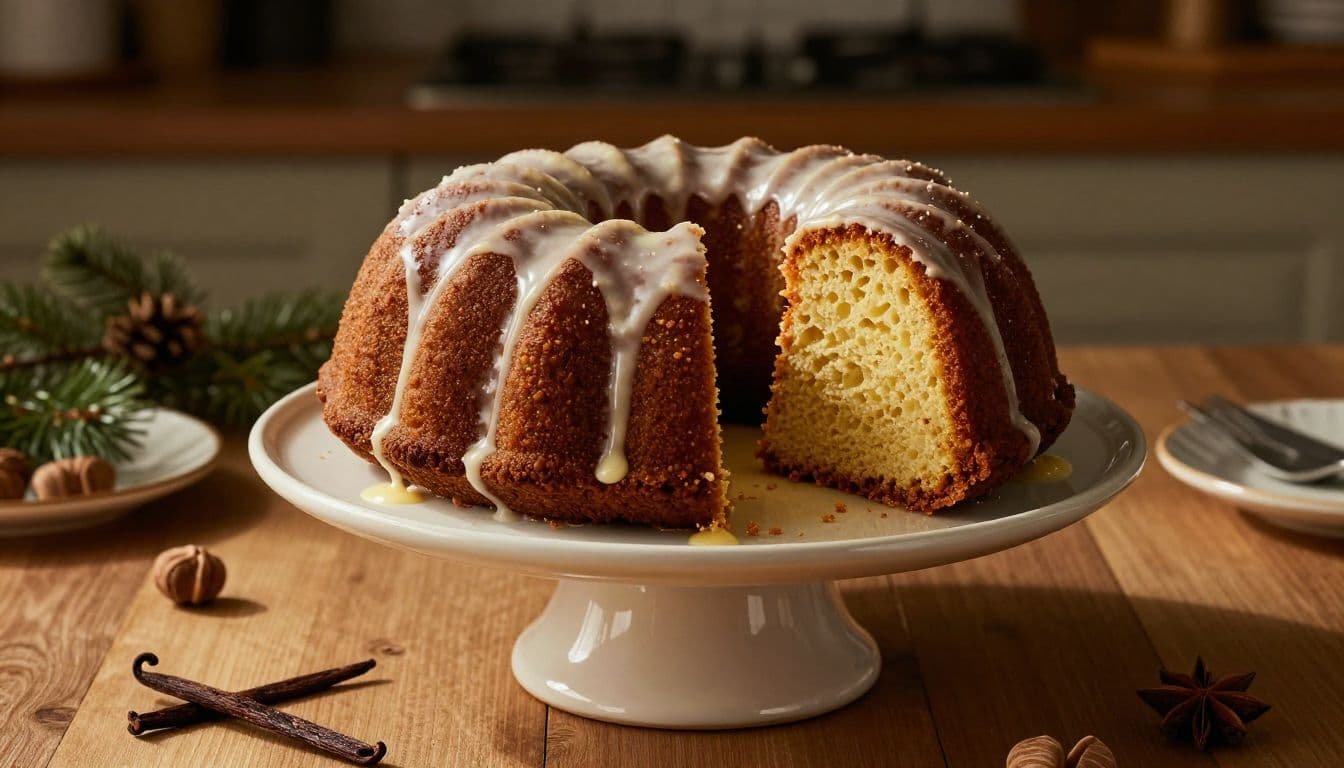
Eggnog gives this cake more than holiday flavor. Its dairy adds moisture and richness, while nutmeg and vanilla make the crumb taste warmer and fuller than a plain vanilla Bundt cake. The from-scratch batter stays the focus, though cake mix and pudding mix can provide convenient shortcuts when time is tight.
How eggnog, nutmeg, and vanilla create the holiday flavor
Full-fat eggnog produces the creamiest texture because it brings more dairy richness to the batter. Lighter eggnog still works, but the cake may taste slightly less creamy and rich. Vanilla rounds out the custard-like flavor, while freshly grated nutmeg adds the familiar holiday aroma. Keep the nutmeg noticeable, not overpowering.
For a gentle variation, add a small amount of cinnamon or allspice. Bourbon or aged rum brings a deeper, warmer note, while rum extract gives you similar character without alcohol. If you enjoy shortcut baking, compare the texture with an easy eggnog Bundt cake recipe made with cake mix.
Choosing the right Bundt pan and preparing it for release
This recipe fits a standard 10-inch, 12-cup Bundt pan. Smaller or highly decorative pans hold less batter, so check the capacity before baking and fill any pan no more than three-quarters full. A 12-cup pan holds more than its practical baking capacity, which is why overfilling can cause spills or a peaked, underbaked center.
Coat every ridge with baking spray that contains flour. You can also brush the pan with shortening, then dust it lightly with flour. A pastry brush helps reach narrow grooves in detailed designs. Don’t depend on the nonstick finish alone, because careful preparation gives the cake its best chance of releasing cleanly.
Recipe card
Eggnog Bundt Cake
- Prep: 20 minutes
- Bake: 45 to 60 minutes
- Yield: 12 slices
- Pan: 10-inch or 12-cup Bundt pan
Ingredients
- 2 1/2 cups all-purpose flour
- 2 teaspoons baking powder
- 1/2 teaspoon salt
- 1 teaspoon nutmeg
- 1/2 teaspoon cinnamon
- 1 cup unsalted butter, softened
- 1 1/2 cups sugar
- 4 large eggs
- 1 cup full-fat eggnog
- 2 teaspoons vanilla extract
- 1 tablespoon bourbon or aged rum, optional
Directions
- Heat the oven to 350°F and prepare the Bundt pan.
- Whisk the dry ingredients together.
- Cream the butter and sugar, then beat in the eggs one at a time.
- Add the eggnog and vanilla, alternating with the dry ingredients.
- Pour the batter into the pan and bake until a tester shows a few moist crumbs.
- Cool in the pan for 15 minutes, then invert onto a rack.
Ingredients and Simple Swaps for the Best Eggnog Cake
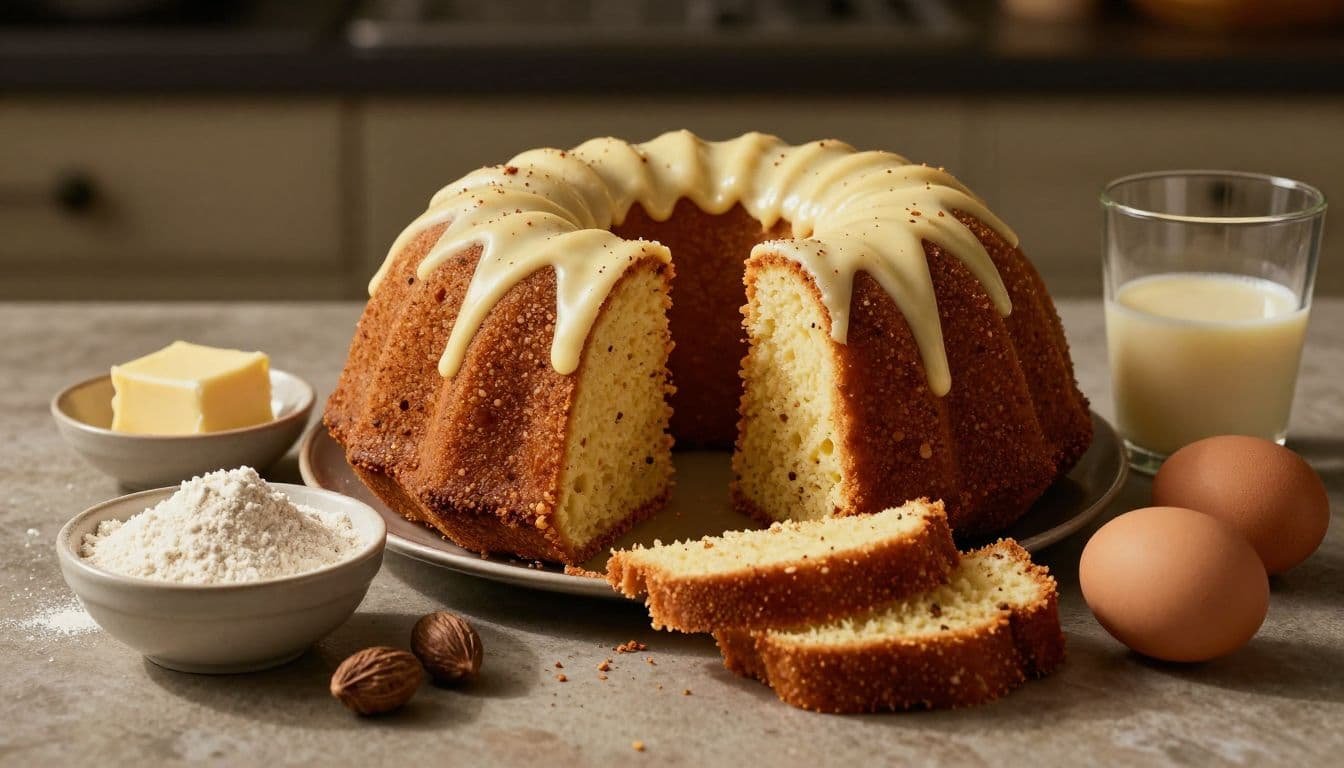
The ingredient list is simple, but each item shapes the cake’s crumb, lift, and holiday flavor. Use the listed amounts as your baseline, then make substitutions carefully because changes in moisture can affect the batter.
Ingredient choices that affect texture and flavor
All-purpose flour gives the cake enough structure, while baking powder provides the lift. Measure flour by weight, using about 120 grams per cup, or use the spoon-and-level method. Scooping directly from the bag can pack in too much flour and create a dry, heavy cake. King Arthur’s flour weight chart offers a dependable reference.
Fresh baking powder also matters. If yours is more than six months old, test 1/2 teaspoon in hot water. It should fizz promptly. Room-temperature butter, eggs, and eggnog blend more evenly, so the batter stays smooth instead of separating. Let refrigerated ingredients sit until they feel cool but not cold.
Unsalted butter gives you the most control over seasoning. Salted butter works too, but reduce the added salt slightly. Granulated sugar sweetens the cake and helps create a tender texture, while eggs add structure and richness. Eggnog supplies creamy moisture, vanilla brings a soft bakery aroma, and nutmeg delivers the signature flavor. Bourbon or aged rum adds warmth, but both are optional. Most of the alcohol flavor will mellow during baking, although you shouldn’t assume all alcohol cooks away.
For an even softer crumb, replace a small portion of the eggnog with sour cream. Cornstarch can also replace a little flour for a delicate texture. Instant vanilla pudding mix is another shortcut, though it creates a softer, more convenience-focused cake.
Easy substitutions for dietary needs and pantry gaps
Dairy-free eggnog and plant-based butter can replace their dairy counterparts, but brands vary in sweetness and thickness. Taste the glaze before serving, then adjust the powdered sugar or spice rather than changing the cake batter carelessly.
For a gluten-free version, choose a tested one-to-one flour blend with xanthan gum when needed. The finished cake may still differ in density and moisture, so test the conversion before serving it for a special occasion. These swaps can work well, but they don’t automatically make the cake allergy-safe.
Quick ingredient guide: Use 2 1/2 cups flour, 2 teaspoons baking powder, 1/2 teaspoon salt, 1 teaspoon nutmeg, 1/2 teaspoon cinnamon, 1 cup butter, 1 1/2 cups sugar, 4 eggs, 1 cup eggnog, 2 teaspoons vanilla, and 1 tablespoon bourbon or aged rum if desired.
How to Bake and Glaze This Holiday Bundt Cake
A careful mixing method, even batter distribution, and patient cooling produce a Bundt cake with a tender crumb and clean, decorative edges.
The mixing method for an even, tender crumb
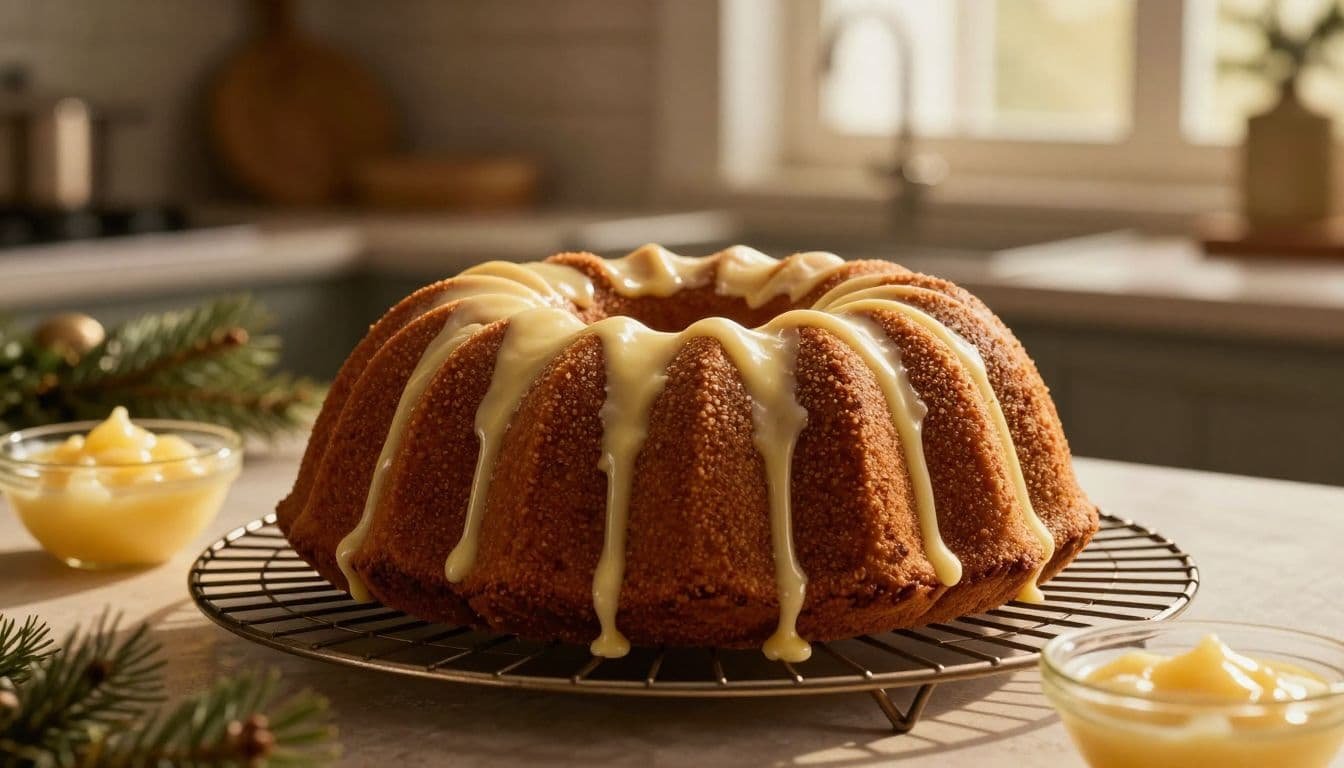
Heat the oven to 350°F. Grease every ridge of the Bundt pan, then dust it with flour or use baking spray with flour. Whisk the flour, baking powder, salt, nutmeg, and cinnamon in a separate bowl.
Beat the softened butter and sugar until pale and fluffy. Scrape the bowl as needed, then add the eggs gradually, mixing well after each one. Add the dry mixture and eggnog in several additions, alternating between them. This keeps the batter from splitting and helps the liquid blend smoothly into the flour.
Mix only until the batter looks thick and smooth. Overmixing develops excess gluten, which can leave the finished cake dense instead of soft. Spread the batter evenly into the prepared pan, especially around decorative sections, so every part bakes at the same rate. Tap the filled pan gently on the counter to release large air pockets.
How to tell when the cake is fully baked
Bake for about 40 to 60 minutes, depending on the pan size, batter depth, and oven accuracy. The top should spring back lightly when pressed, and a skewer inserted near the center should come out clean or with a few moist crumbs. A wet streak means the cake needs more time. For another Bundt-specific doneness reference, see Nordic Ware’s Bundt cake tips.
If the top browns too quickly, loosely tent the cake with foil near the end. Let it rest in the pan for about 10 minutes before inverting it onto a rack. Turning it out too soon can cause collapse, while waiting too long can make sticking more likely.
Four simple finishes, from powdered sugar to bourbon glaze
Cool the cake completely before glazing. Place it on a rack over a tray, then drizzle slowly so excess glaze collects below. A thin glaze disappears into the crumb, while a thicker glaze creates visible drips. Add eggnog or powdered sugar a teaspoon at a time to adjust the consistency.
- Dust the cooled cake with powdered sugar for the simplest finish.
- Stir powdered sugar with eggnog and vanilla for a creamy eggnog glaze.
- Add bourbon or rum to the glaze for a warmer flavor.
- Serve eggnog sauce beside each slice for a softer, spoonable finish.
White chocolate ganache makes a richer option. Save extra glaze for individual slices instead of covering the entire cake heavily.
Recipe card
Ingredients: 2 1/2 cups flour, 2 teaspoons baking powder, 1/2 teaspoon salt, 1 teaspoon nutmeg, 1/2 teaspoon cinnamon, 1 cup softened unsalted butter, 1 1/2 cups sugar, 4 eggs, 1 cup eggnog, 2 teaspoons vanilla, and 1 tablespoon bourbon or rum, optional.
Method: Prepare the pan and mix the batter as directed above. Bake at 350°F for 40 to 60 minutes. Cool 10 minutes in the pan, invert onto a rack, cool completely, then glaze and slice.
Bundt Cake Troubleshooting, Storage, and Make-Ahead Tips
A few small details can decide whether your eggnog Bundt cake releases cleanly, rises evenly, and stays tender. Use the likely cause to choose the right fix instead of trying to correct every problem at once.
Why Bundt cakes stick and how to rescue one
A cake may stick because the decorative grooves missed the grease, the nonstick coating has aged, the center is underbaked, or you turned the cake out at the wrong time. Thoroughly coat every groove before filling the pan, especially with shortening and flour or baking spray that contains flour. This remains the best prevention.
If the cake resists release, let it rest in the pan for about 10 to 15 minutes. Gently loosen the outer edge and the center tube with a thin, flexible spatula. When needed, warm the outside of the pan briefly with a warm towel, then try again. Don’t shake, force, or pry hard, since those actions can tear the cake and leave pieces behind.
Fixes for a dense, wet, dry, or uneven cake
A dense crumb often comes from overmixing, cold ingredients, too much flour, or an oven that runs cool. Measure flour carefully, bring the butter, eggs, and eggnog to room temperature, and mix only until the batter looks smooth. An oven thermometer can reveal an oven that reports 350°F but heats below that temperature.
A wet center usually needs more baking time. The pan may be too deep, or the original time estimate may not suit its size. Test the thickest area with a skewer and continue baking until it shows moist crumbs rather than wet batter. Dry edges point to overbaking or a dark pan, which absorbs more heat. Lower the temperature slightly next time and start checking early.
Uneven browning can come from an off-center rack or crowded oven. Rotate the pan once the cake has set, usually after two-thirds of the baking time. Opening the door too early can reduce the rise. Air tunnels often develop when the batter isn’t pressed into detailed grooves, so spread it carefully and tap the filled pan gently before baking.
How to store, freeze, and serve it later
Cool the cake fully before wrapping or glazing. An unglazed cake keeps at room temperature for a short serving period when wrapped tightly. Dairy-heavy glazes, cream cheese frostings, custards, and sauces should be refrigerated at 40°F or below. Kansas State’s frosting safety guide explains why dairy-based toppings require extra care.
If the glaze runs off, the cake is probably warm or the glaze is too thin. Let the cake cool, then thicken the glaze with powdered sugar. Freeze the unglazed whole cake or individual slices in tight layers of plastic wrap and foil. Thaw in the refrigerator or at room temperature, then add fresh glaze. Store extra sauce separately and drizzle each slice just before serving.
Make-Ahead Recipe Card
- Make ahead: Bake and cool the unglazed cake completely.
- Room-temperature storage: Wrap tightly and serve within a short period.
- Refrigerated storage: Chill cakes with dairy-based glaze or sauce.
- Freezer storage: Freeze the unglazed cake or slices well wrapped.
- To serve: Thaw fully, then add fresh glaze and a light drizzle of sauce.
Print-Friendly Eggnog Bundt Cake Recipe Card
Keep this recipe card nearby while you bake. It includes the full ingredient list, a clear doneness test, glaze instructions, and practical storage notes.
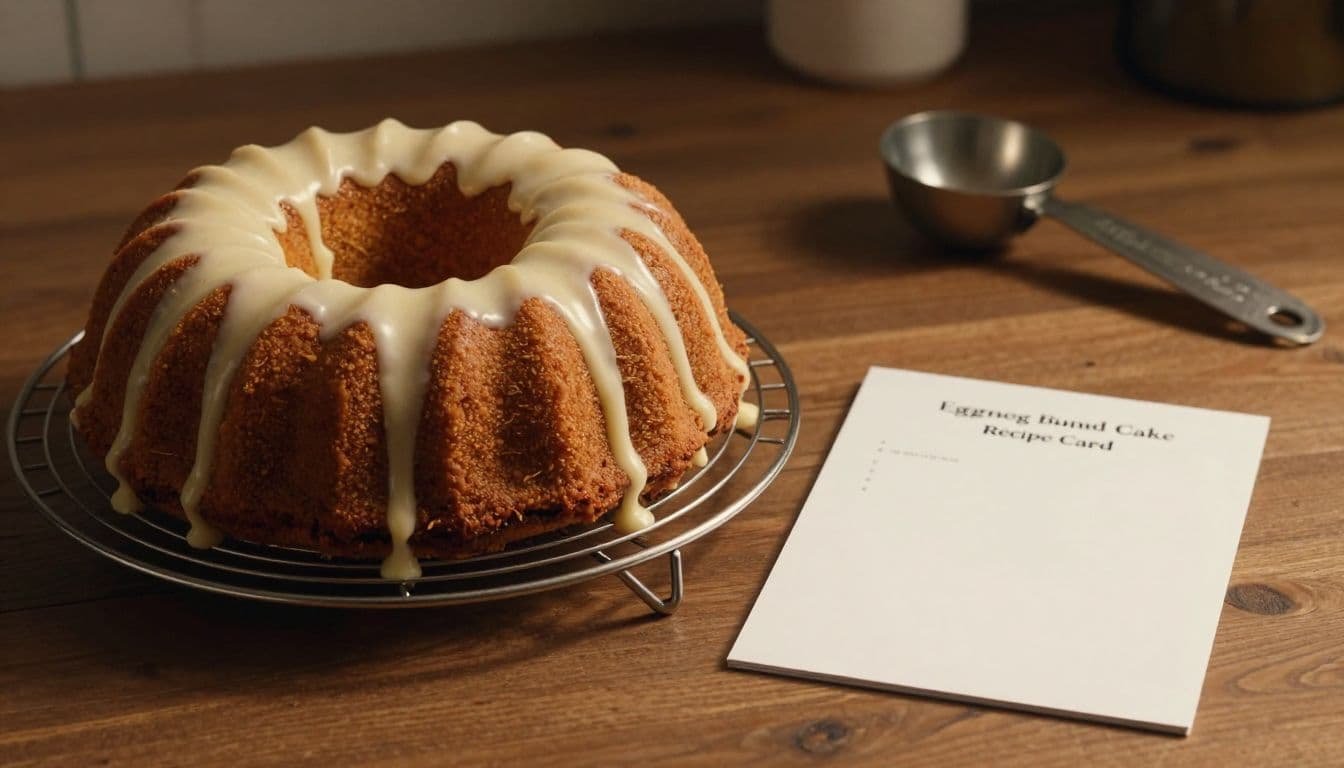
Eggnog Bundt Cake
Description: A buttery Bundt cake with creamy eggnog, vanilla, nutmeg, cinnamon, and a simple holiday glaze.
- Prep time: 20 minutes
- Bake time: 40 to 60 minutes
- Cooling time: 40 minutes
- Total time: About 2 hours
- Yield: 12 slices
- Pan: 10-inch or 12-cup Bundt pan
Ingredients
- 2 1/2 cups all-purpose flour
- 2 teaspoons baking powder
- 1/2 teaspoon salt
- 1 teaspoon ground nutmeg
- 1/2 teaspoon ground cinnamon
- 1 cup unsalted butter, softened
- 1 1/2 cups granulated sugar
- 4 large eggs, room temperature
- 1 cup full-fat eggnog, room temperature
- 2 teaspoons vanilla extract
- 1 tablespoon bourbon or aged rum, optional
Directions
- Heat the oven to 350°F. Grease every groove of the Bundt pan, then dust it with flour or use baking spray with flour.
- Whisk the flour, baking powder, salt, nutmeg, and cinnamon in a bowl.
- Beat the butter and sugar until pale and fluffy. Add the eggs one at a time, scraping the bowl between additions.
- Add the dry ingredients in three additions, alternating with the eggnog. Mix in the vanilla and optional bourbon or rum. Stop mixing as soon as the batter is smooth.
- Spread the batter evenly in the prepared pan. Bake for 40 to 60 minutes.
- Test the thickest part with a skewer. The cake is done when the skewer comes out clean or with a few moist crumbs, but no wet batter.
- Cool in the pan for 10 minutes. Invert onto a rack and cool completely, about 30 minutes.
Glaze
- 1 1/2 cups powdered sugar
- 2 to 3 tablespoons eggnog
- 1/2 teaspoon vanilla extract
- Pinch of nutmeg
- 1 tablespoon bourbon or rum, optional
Whisk everything until smooth, adding eggnog slowly until the glaze drips from a spoon. Drizzle over the cooled cake.
Equipment: Bundt pan, mixing bowls, electric mixer, whisk, rubber spatula, measuring cups and spoons, cooling rack, and skewer.
Storage: Refrigerate cake with dairy-based glaze within two hours at 40°F or below. See these egg handling and storage tips for additional guidance. Store unglazed cake tightly wrapped, freeze for up to three months, and glaze after thawing.
Substitutions: Use dairy-free eggnog and plant-based butter for a dairy-free version. A tested one-to-one gluten-free flour blend can replace the all-purpose flour.
Frequently Asked Questions
These answers cover the small details that can make your eggnog Bundt cake easier to bake, store, and serve.
Can I make eggnog Bundt cake without alcohol?
Yes. Bourbon and rum add flavor, but they aren’t needed for the cake’s structure, rise, or moisture. Omit them completely, or add a small amount of rum extract for a similar warm note.
Rum extract is much stronger than rum, so start with 1/4 teaspoon and taste the glaze before adding more. You can increase it carefully, but too much extract can taste sharp and artificial.
Can I use store-bought eggnog in this cake?
Refrigerated store-bought eggnog works very well in this recipe. Use it straight from the carton, but remember that brands vary in sweetness, thickness, and spice.
Taste the glaze before drizzling it over the cake. If the eggnog is already sweet or strongly spiced, add less powdered sugar or nutmeg; if it’s mild, add a little more vanilla or spice.
Why did my Bundt cake fall apart when I turned it out?
The most common causes are an incomplete pan coating, underbaking, or unmolding at the wrong time. A Bundt cake should rest in the pan briefly, then cool fully on a rack, rather than sitting in the pan until cold.
Use this quick prevention checklist:
- Coat every groove with flour-based baking spray or shortening and flour.
- Bake until the center shows no wet batter.
- Cool in the pan for about 10 minutes before inverting.
- Loosen the edges gently if the cake resists.
Can I bake this recipe in a different pan?
A loaf pan or tube pan may work, but the batter depth will change the baking time. Fill the pan only partway, leaving room for the cake to rise.
Start checking early, then test the center with a skewer. Follow the doneness test, not the Bundt timing, because a shallow pan may finish much sooner.
How far ahead can I make eggnog Bundt cake?
Bake the cake one or two days ahead, cool it completely, and wrap it tightly. Add the glaze shortly before serving so it stays fresh and attractive.
For longer storage, keep sauces separate and refrigerate dairy-based toppings. USDA guidance recommends keeping egg products at 40°F or below and using leftovers within three to four days. See the USDA egg product safety guidance.
What can I serve with eggnog Bundt cake?
Add a spoonful of whipped cream, vanilla ice cream, fresh berries, or sugared cranberries. A warm coffee drink also pairs beautifully with the cake’s nutmeg and vanilla flavor.
For leftover slices, a small drizzle of warmed glaze brings back moisture and shine. Add it just before serving rather than soaking the cake.
Quick Recipe Card
- Bake: 350°F for 40 to 60 minutes
- Pan: 10-inch or 12-cup Bundt pan
- Cool: 10 minutes in the pan, then completely on a rack
- Finish: Eggnog glaze with optional rum or bourbon
- Store: Wrap unglazed cake tightly; refrigerate dairy-based glaze
Conclusion
A carefully greased Bundt pan, gentle mixing, and patience during cooling are the keys to a beautiful Eggnog Bundt Cake. These simple steps protect the tender crumb and help every warm, spiced detail release in one elegant piece.
Choose the finish that suits your gathering, whether that’s a light sugar dusting, creamy eggnog glaze, or optional rum or bourbon topping. Set the cake at the center of your holiday table, then enjoy each tender slice with its buttery texture, vanilla aroma, and comforting nutmeg flavor.
Recipe Card
- Bake: 350°F for 40 to 60 minutes
- Cool: 10 minutes in the pan, then completely on a rack
- Finish: Powdered sugar, eggnog glaze, or optional boozy glaze
- Yield: 12 slices
- Storage: Refrigerate cake with a soft dairy-based glaze within two hours; freeze the unglazed cake for longer storage
Save pin for later